
Purchasing proxies can be a headache, especially when you know you’ll pay for a long subscription service. The flashy marketing of most providers isn’t helping, as every datacenter proxy on the market may seem like a premium product.
To get the real picture, you must ask yourself a few questions and evaluate the proxy provider based on important factors. I’ve spent the last five years buying proxies for web scraping and other automation tasks. What follows are my recommendations on how to purchase a datacenter proxy.
What is Your Use Case?
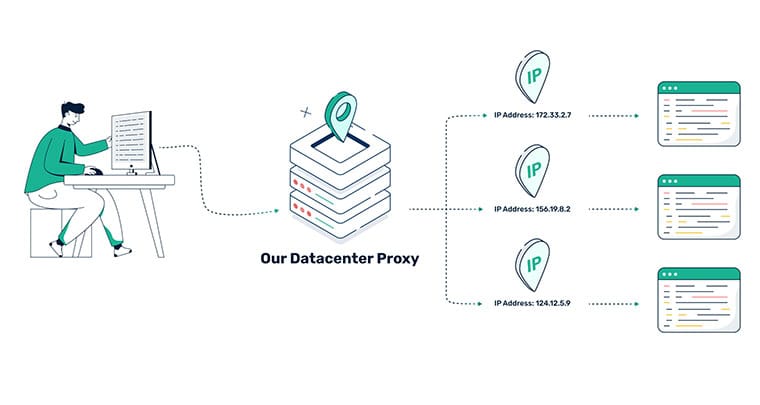
Datacenter proxies are intermediaries that route your internet traffic through powerful servers in commercial data centers. Residential internet service providers don’t verify such connections, but they aren’t limited by them either. Such an internet connection ensures that datacenter proxies are the fastest proxy type.
But that’s not it. Datacenter proxies are also the cheapest. One server can create thousands of virtual machines with a new IP address. Providers don’t need to support a physical device for each IP address, which drives down the price per IP to a bit more than a dollar.
I could say a lot more good about datacenter proxies, but it won’t change the fact that they aren’t meant for every use case. Yes, datacenter proxies are fast and cheap, but sometimes you need one or two IP addresses to ensure maximum anonymity. In such cases, you are better off using a residential proxy.
And when you need to access mobile services apps or website versions, for example, you must purchase mobile proxies. There’s no way around it; sometimes, datacenter proxies, even if the cheapest option, won’t be the best performing.
The only way to avoid a mistake is to research your use case before committing to a large pool of IP datacenter proxies. Many blindly purchase large datacenter pools to see IPs banned on their websites quickly.
Do You Need Accurate Location Targeting?
A drawback of datacenter proxies is that they aren’t very good at targeting locations on a city level. A provider might have a large selection of regions, but we must understand that commercial data centers capable of running proxies are sparse.
Due to datacenter proxies using a commercial internet connection, you won’t be able to select a specific city. A country or a region is as far as datacenter proxies can go. If your target website requires more accurate targeting, as is often the case in bulk purchasing, you’ll need residential proxies.
These proxies are set up in residential areas with ordinary internet connections. They are slow, but you must live with them if your tasks deem it necessary.
Private or Shared Access?
Datacenter proxies work great when shared with multiple users. Since the servers are powerful, you won’t see much performance drops. However, you cannot be sure that other users won’t ban the IPs on your target web servers. Therefore, consider choosing a private proxy pool.
Private datacenter proxies are better both for speed and detection avoidance. At a slightly larger cost, you can use the IPs exclusively by yourself. Unless you are on a strict budget, I suggest choosing dedicated proxies.
Are You Fine With Rotating IPs?
Most datacenter proxies are rotating by default. It makes it more difficult for websites to detect you are using a proxy and restrict your access if you aren’t playing by the rules. However, some use cases require a static IP address, which doesn’t change over time. Consider which proxy type is best for you before purchasing.
Factors for Choosing a Datacenter Proxy Provider
Considering the above factors will help, but the choice of provider might be even more important. The decision is complicated because one cannot evaluate the quality of the proxy provider without testing the proxies and supplementary services provided.
The first thing to look for in a provider is the IP pool. Most providers brag about millions of IPs available. While it is true in most cases, you should ensure that the IP pools are big enough in your locations of interest. Many providers have IPs available only in certain regions, usually those where they are the cheapest.
Customer support is also an important factor. Datacenter proxies are the most reliable type, but downtimes, bugs, or other technical issues might still arise. Chatting with their team and checking their responsiveness before purchasing proxies is a good idea. Make sure to see if they have a blog with useful guides, too.
Excellent reviews from other customers indicate the provider isn’t lying about the quality and quantity of their products. Check platforms like Trustpilot and online forums related to your use cases. You shouldn’t trust what others say blindly, but the consensus is a good indication of quality.
Lastly, test the proxy provider with a free trial. A good provider is transparent, so it won’t shy away from showing what their proxies are capable of by providing free access. Some providers even give away proxy lists completely free of charge. If they can provide proxies for free, their paid proxies will be even better.
If you need a recommendation, I had a lot of luck with IProyal datacenter proxies. They are relatively cheap, have large IP pools in good locations, and have a responsive and helpful team. Their dashboard and browser extension are very convenient and on par with what most other providers will have you paying extra. Otherwise, you can also check out our list of the best datacenter proxies providers on the market.
Wrapping Up
The biggest risk lies in choosing what isn’t optimal for your use case. It’s not that proxies won’t work at all, but it might not be an optimal use of your money. Considering the above questions is essential for ensuring the optimal performance of your datacenter proxies. A good provider will also help you to answer them.