
Software development is undergoing a fundamental shift. AI agents and coding assistants have moved beyond experimental novelties to become essential teammates in daily workflows. Industry analysts have dubbed 2024 “the year of the agent” and the momentum shows no signs of slowing.
The numbers tell a compelling story: 84% of developers are already using or planning to use AI tools, up from 76% just a year prior. Nearly all professional developers have tried AI coding assistants in some capacity, with enterprise developers reporting almost universal adoption.
The Adoption Curve Is Steepening
Organizations are not just tolerating AI use; they’re actively encouraging it. GitLab’s data shows a dramatic jump from 23% to 39% of organizations actively using AI in development within a single year.
The automation potential is substantial. Gartner projects around 30% of current software development tasks will be automated by AI by 2025. Other studies anticipate AI could automate roughly 40% of software development activities in the near future, dramatically shortening release cycles and reducing costs. While AI development can be costly upfront, the long-term productivity gains often justify the investment.
Roles Being Transformed Across the Development Lifecycle
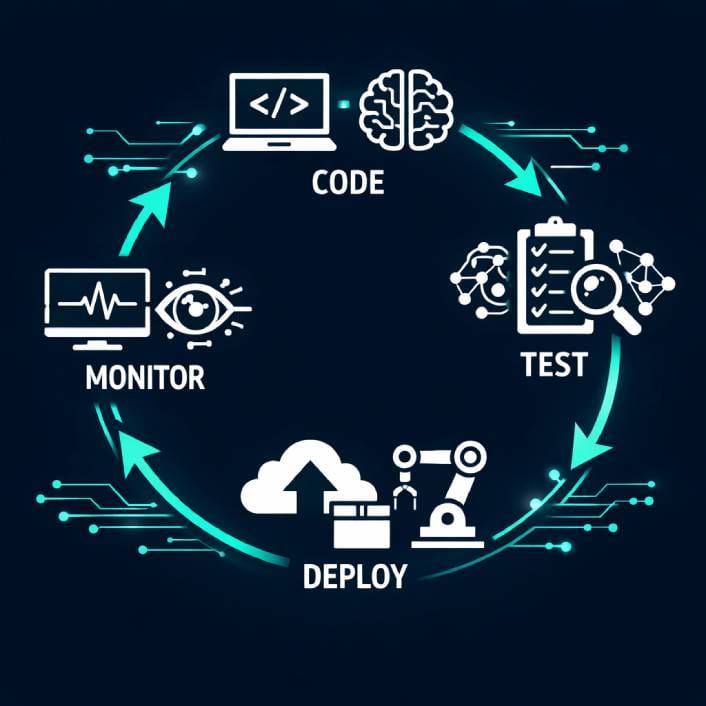
AI agents are impacting every stage of software development, creating a new hybrid workforce where human developers work alongside AI teammates that handle routine or analytical tasks in seconds.
Software Developers and Engineers
The most visible impact appears in how developers write code. AI coding assistants like GitHub Copilot and Amazon CodeWhisperer are integrated into popular code editors to autocomplete code and generate functions based on context. This accelerates programming by automating repetitive code patterns and providing instant solutions to common problems.
Code Reviewers and QA Engineers
AI increasingly acts as an automated code reviewer and quality auditor. These tools analyze code for bugs, security vulnerabilities, or style inconsistencies in real-time. Between 81% and 90% of developers report that code quality has improved when using AI assistants.
QA Testers and Test Automation Engineers
Quality assurance roles are seeing significant augmentation. A striking 98% of enterprise developers surveyed said their organizations have experimented with using AI tools to generate test cases. Combined with automated testing tools, teams can achieve comprehensive quality assurance at scale.
DevOps Engineers and Site Reliability Engineers
AI agents are streamlining DevOps, IT operations, and deployment tasks. They can monitor CI/CD pipelines, manage cloud infrastructure, and optimize deployment configurations. Machine learning-powered AI monitoring tools detect anomalies in production and can trigger automated fix scripts, reducing the on-call load for DevOps engineers.
Project Managers and Scrum Masters
Modern project management tools now include AI features that convert natural language descriptions into work items, estimate effort, or prioritize backlogs. AI agents are beginning to function as assistant project managers, handling status tracking and risk prediction.
Technical Writers and Knowledge Managers
AI writing assistants can produce documentation from code or update docs as code changes. They can summarize technical discussions and answer natural language questions about repositories.
The Tangible Benefits of AI Integration
Early adopters have reported significant improvements across key metrics.
- Faster Development: GitHub’s research found AI assistance led to a 55% increase in developer productivity on average. Over 82% of companies saw at least a 20% productivity increase after integrating AI into development.
- Improved Code Quality: AI tools increase code quality by suggesting best practices and catching mistakes. Following secure coding practices alongside AI assistance further strengthens application security.
- Enhanced Testing Coverage: AI agents excel at generating broad test coverage quickly, including tests for legacy code that lacked proper coverage.
- Less Mental Fatigue: By outsourcing repetitive tasks to AI, developers can concentrate on creative work. AI agents also accelerate onboarding for new team members.
- Better Collaboration and Consistency: AI code suggestions apply project style guides and best practices, ensuring consistency across multi-developer teams.
Challenges That Require Careful Navigation
Despite the advantages, integrating AI agents brings notable challenges.
Accuracy and Ethical Concerns
AI-generated outputs are not guaranteed to be correct. Current models can produce code that runs but contains hidden bugs. AI models also learn from existing code and data, meaning they can pick up biases or bad practices. These models often don’t explain their reasoning, making transparency a concern. Organizations should implement responsible AI practices, including regular audits and maintaining human oversight over important decisions.
Data Privacy and Security
Many AI coding assistants operate in the cloud, raising confidentiality and data privacy compliance issues for companies with strict IP protection rules. Some vendors have responded with on-premises or self-hosted AI models. Organizations must carefully vet AI platforms and their AI data pipeline to ensure code never leaves secure environments.
Skill Erosion and Workforce Impact
A concern exists that developers might become overly reliant on AI assistance, potentially hampering skill development. While 60% of software engineers expressed concern about job security, 45% saw new opportunities arising alongside AI. The challenge for organizations is to manage this transition by upskilling developers and assuring teams that AI is a tool, not a replacement.
Workflow Integration
Introducing AI agents can be disruptive initially. Teams face a learning curve, and legacy systems might not play well with AI tools. Clear guidelines and starting with small pilots can help smooth the transition. This is why many organizations with deeply embedded tech stacks are exploring custom agentic AI development services that architect agents around their existing systems instead of requiring a complete infrastructure overhaul. A purpose-built agentic solution can adapt to internal APIs, proprietary data formats, and team-specific workflows — reducing friction while still delivering the productivity gains that off-the-shelf tools promise.
Leading Tools Driving the Transformation
Several platforms are pioneering this shift:
GitHub Copilot integrates into code editors as an AI pair-programmer, generating completions based on your project context and learning from billions of lines of code.
Amazon CodeWhisperer focuses on cloud and enterprise development with an emphasis on AWS APIs and best practices for cloud services.
Tabnine offers an AI code completion tool that can run on-premises, emphasizing privacy for enterprise use.
Atlassian Jira AI assists with project management by analyzing project data, suggesting issue prioritization, and identifying development bottlenecks.
Autonomous agent frameworks like AutoGPT and ChatDev demonstrate what fully autonomous AI developers might look like, with multiple agent “roles” working in concert to generate and refine code with minimal human input.
Beyond off-the-shelf solutions, many organizations are partnering with an AI agent development company to build custom agents tailored to their specific workflows and codebases.
Looking Forward
The narrative emerging from the industry is clear: AI will not replace developers but empower them. Developers roles will evolve toward solving complex problems and strategic decision-making while AI handles routine work.
Expect the “AI agent on every team” scenario to become reality. Teams that embrace these tools find they can build more with less, iterate faster, and maintain higher standards. The future of software development is a partnership of human ingenuity and artificial intelligence, working side by side.